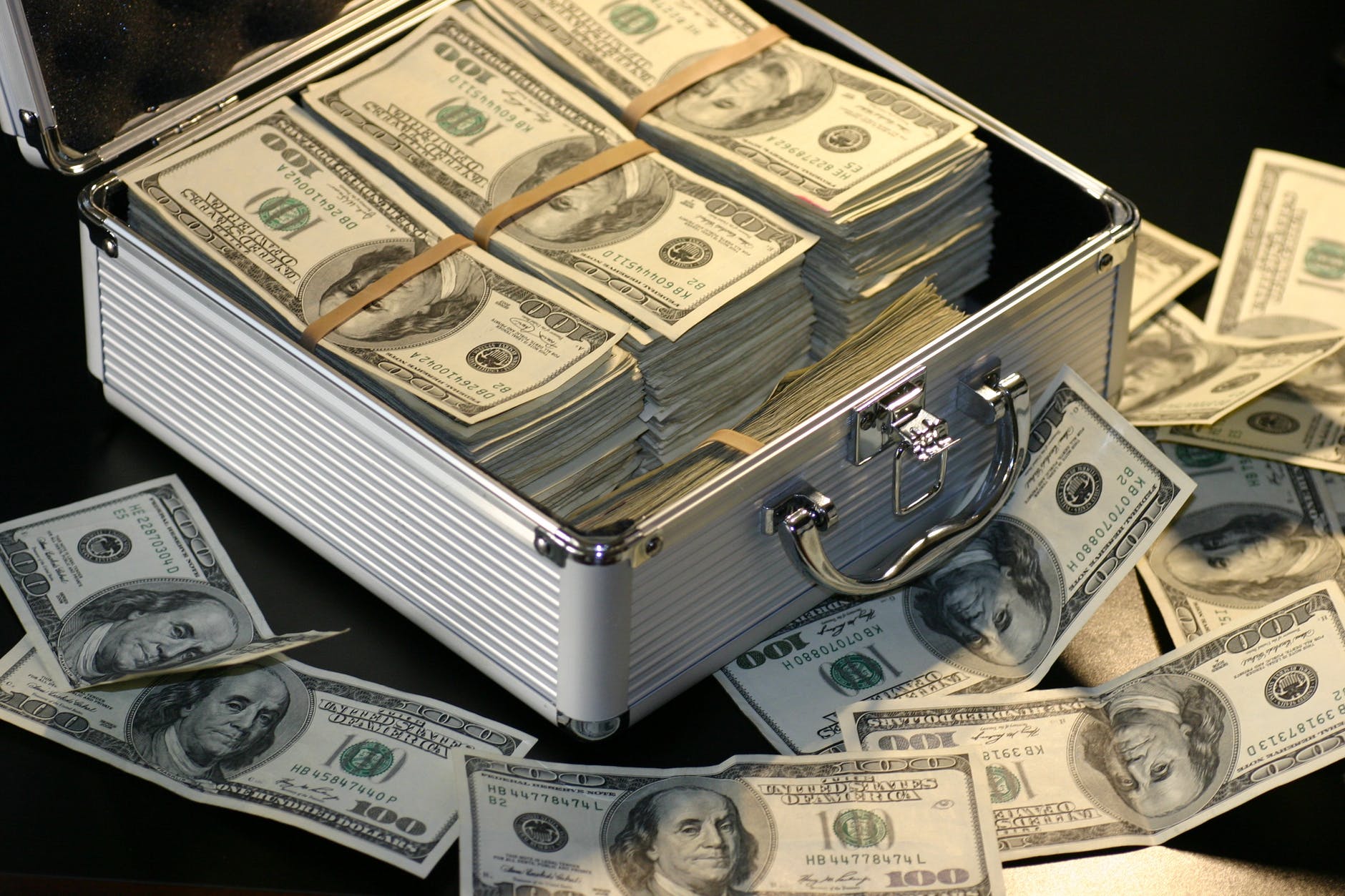
The United States of America dollar, the new currency of Venezuela

Photo by Pixabay on Pexels.com

The data also means that Venezuela’s government is twice as indebted. 

Forbes

In Venezuela, a transformation is being carried out that the Maduro regime will not agree; individuals are adopting the United States dollar as a trade worth, and everyone is trading for merchandising in US greenbacks, except the online banking area in Bolívar or the new experiment / Petro cryptocurrency program.

As the year 2020 begins, there was a rise in economic life in Venezuela, the world’s largest hyperinflation, the latest development, items have value in the morning and doubles value in the afternoon. This applies to everything from medicines to food and services. On Thursday, January 2, 2020, the Central Bank of Venezuela announced the first official dollar value of the stock market.

Daniel Betancourt, a commercial law expert, said in particular: “For those who are surprised that the dollar has magically hit seventy thousand, Petro usually offers a bonus. This is the cost of Maduro’s pet experiment”. Monetization is the key to inflation in Venezuela; the value of the U.S. parallel currency rose to seven (584.93%), indicating that the unauthorized rate eventually declined by ninety-eight (70%) at the end of 2019.

“For half of this value in the official market, the deviation from the nominal value was seven (205.28%), and the devaluation was ninety-eight (63%)”.

Going fast; People are worried and desperate, salaries are currently three dollars a month, the economy is still collapsing. Whereas, Maduro resumes his television program, denies the obvious, and praises the “successes” of the revolution.

Eurozone Crisis in 590 words

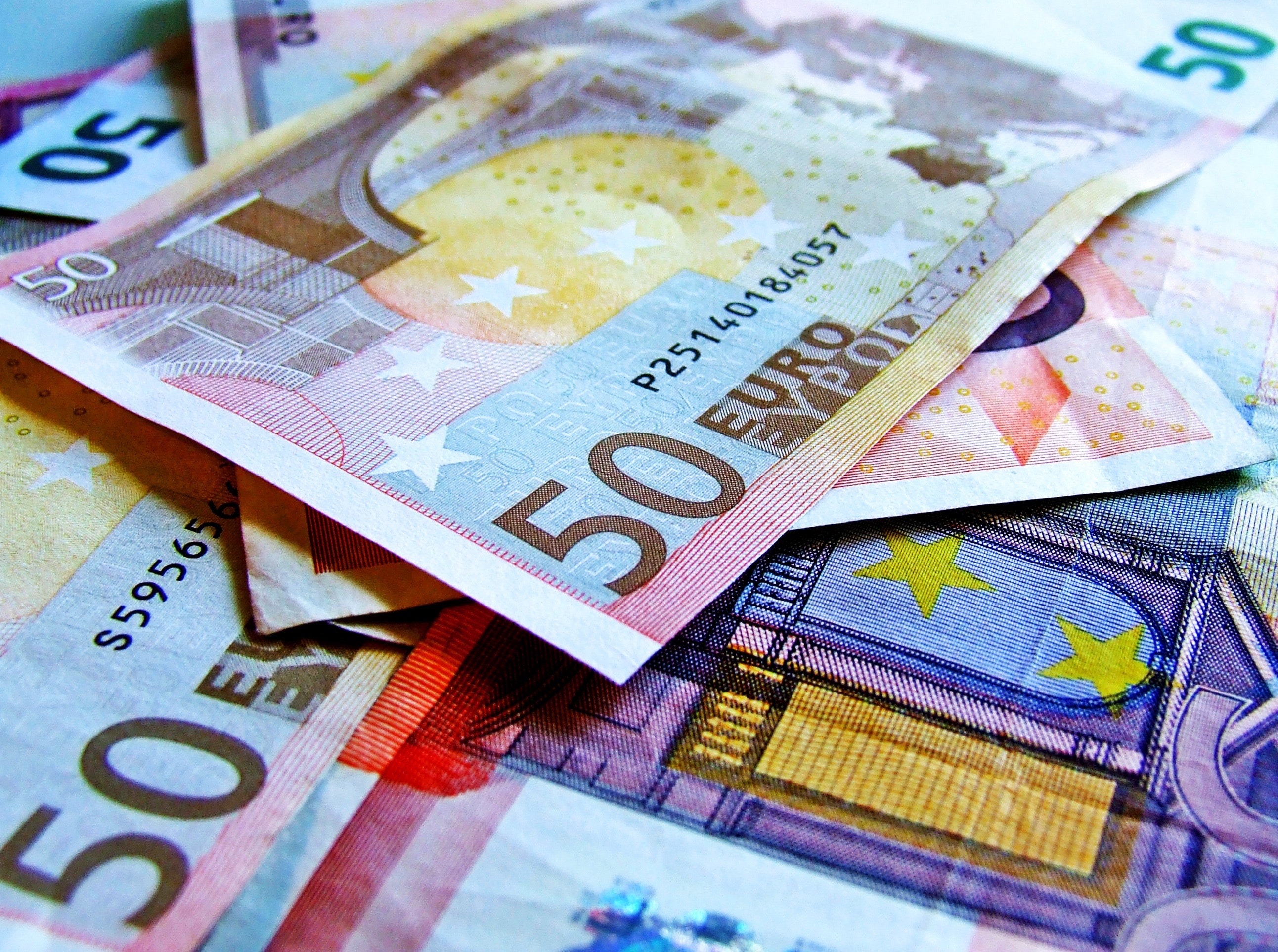
The Eurozone Crisis was an economic crisis that occurred in Europe as a direct result of the US housing market crash in 2008. In short many European bank invested in the US housing market and in 2008 the US housing market crashed meaning it’s value dramatically dropped and European backs were left with property that was nearly worthless. Effectively what this means for the European banks is that they essentially lost large sums of cash and needed to be bailed out by national governments

Due to this crisis national government of Europe had to bail out their banks because the US housing market crashing. It was discovered in these difficult times for Europe that Greece had a large dept problem, the Greek government admitted to having a large dept which stemmed from poor collecting of taxes and corruption. Greece wasn’t able to bail out their banks thus other members of the European Union had step in and chip in to pay off the the Greek debt. It is repulsive to say the least that the national governments of the European Union have to bail out bankers in order to keep their economy flowing but it is more repulsive to know your own government cannot bail out the banks without a loan because they can’t afford to bail out the banks.

Germany, the economic pillar of the European Union alongside with its many allies from the EU aided Greece by sending Greece large care packages of cash. In reality the care packages are loans meaning Greece has to pay Germany and all the other EU members, in reality what this means for Greece is that they have to pay back all these loans. In addition, the European Central Banks decided to buy government bonds from the EU member states which suffered the most from the crisis (such as Greece, Italy & Spain) to aid the EU’s economies from nearly collapsing and starting a domino effect that could eventually affect other members of the EU. The decision by the European Central Bank garnered much criticism especially by a group of German eurosceptics due to the European Central Bank spending 2.1 trillion euros in the last 4 years in order bailout EU member states and the case was taken to court to the European Court of Justice in which they ruled in favor of the European Central Bank .

It is easy to blame Greece and say that they should leave the Eurozone or blame the banks because of their greedy investments, in reality it was a combination of all the disjointed decisions that enabled the Eurozone crisis to occur. The Eurozone crisis revealed larger problems of cohesion and transparency in the cogs of the grand machine that we refer to as the EU. It cannot be understated the huge oversight in part by the EU nor should we hold their identity to that mistake. Credit should be given and it should be given where it is due to the
European Central Bank and the EU member states that contained the situation from spilling over.

References
Landler, M. (2008). The U.S. Financial Crisis Is Spreading to Europe. Retrieved from https://www.nytimes.com/2008/10/01/business/worldbusiness/01global.html
Kosakowski, P. (2019). The Fall of the Market in the Fall of 2008. Retrieved from https://www.investopedia.com/articles/economics/09/subprime-market-2008.asp
Eurozone crisis explained. (2012). Retrieved from https://www.bbc.com/news/business-13798000
Bloomberg. (2015). The European Debt Crisis Visualized [Video]. Retrieved from
https://www.youtube.com/watch?v=j4_tyEl84IQ
Carvalho, R., Ranasinghe, D., & Wilkes, T. (2018). The life and times of ECB quantitative easing, 2015-18. Retrieved from https://www.reuters.com/article/us-eurozone-ecb-qe/the-life-and-times-of-ecb-quantitative-easing-2015-18-idUSKBN1OB1SM
Greek bailout crisis in 300 words. (2018). Retrieved from https://www.bbc.com/news/world-europe-45245969
Sinner, M., & Canepa, F. (2018). ECB wins court’s backing for buying government debt. Retrieved from https://www.reuters.com/article/us-ecb-policy-court/ecb-wins-courts-backing-for-buying-government-debt-idUSKBN1OA0Q0

The Future of EU’s Farmers

The European Union launched it’s common agriculture policy (CAP) in 1962 in order to support farmers and productivity of the food they manage to produce for the whole EU. The European Commission is looking towards a road map for CAP beyond 2020. In the road map the Commission several notable objectives from the proposal the Commission aims to achieve such as have a more controlled allocation of money for all farmers to receive income support, especially those that need the support and helping younger farmers to join the business as soon as possible. Let me tell you why Farmer’s aren’t the biggest fan of the proposal.

In the 21st century European farmers have double the challenge when it comes to producing food which is to produce while protecting the nature. This becomes increasingly difficult when farmers have to minimize the amounts of resources they’re using and produce the most they can out of the prudent resources they’re using. Farming, being a farmer is an extremely demanding and it’s only going to harder with the plans the EU has in store for the future of CAP.

Cancel your vacation plans to FarmVille because the EU’s tightening up the belt. Partially in due part to Brexit and the shifting of priorities the Commission proposed an initial 5% cut of the CAP budget, meaning money is going to be a lot more controlled when it comes to the CAP budget following 2020. This outrageous demand received a quick EU farmers and the environmental community alike. European farmers have all the right to be outraged at the Commission’s proposal.The European Court of Auditors even stated in response to the proposal’s long-term goal is “not apparent”. The future of farmers are in the hands of businessmen, only corporate lobbyists are the ones that are happy with this cut.


“What we’re seeing in the EU along this route, I call it the ‘technology-free zone.’ […]  I think again they will pay the price for this in the future ”


US Agriculture Secretary Sonny Perdue

On top of it all instead of making friends across the pond we’re receiving threats from the US minister for agriculture. Regardless of his tone, Perdue made a fair point that Europe’s agriculture market is lacking behind compared to the US, Brazil & China in terms of growth. The lack in growth is largely due to the amount of pressure the farming sector is put under, the problem stems from the lack of access to new technologies and unpredictable political environment.

The farming business in Europe is behind, that is not what Europe is know for. There are definitive changes that need to come but the changes shouldn’t come at the cost of farmer’s livelihoods.

References:
European Commission. (2019). The common agricultural policy at a glance. Retrieved from https://ec.europa.eu/info/food-farming-fisheries/key-policies/common-agricultural-policy/cap-glance_en#thepurposeandbenefitsofthecap
European Commission. (2019). Future of the common agricultural policy. Retrieved fromhttps://ec.europa.eu/info/food-farming-fisheries/key-policies/common-agricultural-policy/future-cap_en
European Environment Agency. (2019). Agriculture. Retrieved from https://www.eea.europa.eu/themes/agriculture/intro#tab-news-and-articles
Michalopoulos, S. (2019). US agriculture minister: Europe will pay the price for ignoring science. Retrieved from https://www.euractiv.com/section/agriculture-food/news/us-agriculture-minister-europe-will-pay-the-price-for-ignoring-science/
Michalopoulos, S. (2019). EU farmers ‘hostages’ of unstable politics and technology gap, report claims. Retrieved from
https://www.euractiv.com/section/agriculture-food/news/eu-farmers-hostages-of-unstable-politics-and-technology-gap-report-claims/
Open Access Government. (2019). The future of Common Agricultural Policy (CAP) in Europe. Retrieved from https://www.openaccessgovernment.org/common-agricultural-policy-europe/62475/
Luke, F. (2019). Will the post-2020 CAP be a missed opportunity?. Retrieved from https://www.euractiv.com/section/agriculture-food/opinion/will-the-post-2020-cap-be-a-missed-opportunity/

Europe: Income inequality on the rise

National wealth increased over the European countries in the 21st century, but the inequality between the wealthiest 1 percent and poorest 50 percent is more noteworthy than it was in the 1800s. Well, what does income inequality mean for the future growth of Europe’s wealth? Today, the top 1 percent income growth has doubled, but due to globalization, it has not for the unlucky 50 percent.


“ This opens the door to political entrepreneurs who try to set ‘the people’ against the ‘ruling class.’”

(Chhor, 2018)

While in Europe, as gross income inequality has diminished over the last two decades, both income inequality and unemployment have remained high in some member states on a country-by-country basis (Wolff, 2016). Income inequality is utilized as an indicator of a country’s national wealth; income inequality in European countries means limited opportunities for citizens. Income inequality results from various problems, such as unemployment, which is particularly high in the southern EU member states (Wolff, 2016). Unemployment is stagnating in the Member State’s economic growth state and greatly discourages young people from entering the labor market and pursuing their career. Unfortunately, unemployment has the most significant impact on children; children who live in a house with unemployed parents tend to have poor results at school. At the moment, the effects on children do not appear to be obvious, but they are of greater importance for life expectancy and future quality of life in Europe.

In addition, income inequality is crucial for society, as it conveys an air of unrest that can influence people to favor the vote of populist political parties over other alternatives (Chhor, 2018). The sole purpose of populist political parties is to exploit the feeling of public dissatisfaction and to exploit their vulnerabilities to achieve a government position in national elections. Populist political parties claim to be the voice of the public that works exceptionally well in times of crisis or events that can drastically affect a Member State, such as Brexit (Wolff, 2016).

Finally, when discussing income inequality, pensions need to be addressed, as they contribute most to redistributing the country’s wealth. Currently, pensions account for almost 50% of the EU inequality fiscal policy (Inchauste, 2018). On the one hand, although pension expenditures in Europe have increased or remain the same, spending on families and education has decreased to achieve better pensions (Wolff, 2016).

What does income inequality mean for the future growth of European prosperity? In sum, it can be said that economies are stagnant due to high unemployment, difficult labor market penetration, and the poor performance of children in school. Populist parties gain greater favor and are influenced by the European public in Europe. Higher pension expenditure, but at the expense of reducing family and education spending. These three points must be taken into account when discussing the obstacles that Europe must overcome to ensure its wealth in the future.

References

Darvas, Z. (2018). This is the state of inequality in Europe. Retrieved from https://www.weforum.org/agenda/2018/05/european-income-inequality-begins-to-fall-once-again
Commission, E. (2019). Publication of the FEAD mid-term evaluation. Retrieved from https://ec.europa.eu/social/main.jsp?langId=en&catId=89&furtherNews=yes&newsId=9331
Inchauste, G., & Karver, J. (2018). Fiscal Redistribution in the European Union. World Bank Group. Retrieved from http://pubdocs.worldbank.org/en/632981520461235859/EU-IG-Report-Fiscal-Redistribution.pdf
Chhor, K. (2018). Income inequality, financial crisis and the rise of Europe’s far right. Retrieved from https://www.france24.com/en/20181116-income-inequality-financial-crisis-economic-uncertainty-rise-far-right-europe-austerity

To be or not to be that is the Brexit question

In the simplest terms Brexit is the United Kingdom’s leave of the European Union based on a closed referendum vote by the people of England, Scotland, Wales, Ireland and Northern Ireland. What this means following the referendum vote in 2016 the United Kingdom began the tedious process of leaving the European Union. To add on to the already difficult process the United Kingdom government is dived on what it wants to do, in other words the government does not always know what it’s best to do for the people.

The Irish border plays a large role in the Brexit negotiations. Brexit could create a strange reality where the Republic of Ireland is part of the European Union and Northern Ireland is not. Meaning the border between Ireland and North Ireland would change into a border of the European Union that is visible (Peter Foster, 2019). While on the surface this change in the border seems small, in actuality this change goes against the peace agreement put forth by the Good Friday Agreement which renders the border invisible. This is the reality of Brexit that crossing to the other side of your own nation could possibly mean standing in a foreign country.

While a hard Irish border is of great concern but in the middle of it all are the people. The referendum vote brought to light the preexisting political division within the United Kingdom and only made worse than they had already been. The referendum votes divided friends, neighbors, even families “We just try not to talk about it because it still feels quite sore” says Jo (Cosslett, 2016). Regardless of which side you’re on, the whole process of Brexit ignited a civil political war which left both sides frustrated and hurt.

The vote hurt everyone, the youth are no exception. If, Brexit goes through young adults in particular that are now entering the workforce are the group of people that are going to bear the brunt the hardest. They are set to expect a drop in average income which was already lower than it has been 2007-8 and increase in unemployment, 520-820 thousand people are expected to be jobless following Brexit (Odendahl & Springford, 2016). The youth is right to feel discarded and pushed aside by the majority that chose to throw away their future opportunities.

It goes without saying that Brexit is no easy task to understand. It is a difficult process that the Untied Kingdom embarked on that could bring on disastrous changes for all people living under Her Majesty’s Kingdom. Whether it be living close to the Irish border, or somewhere in the middle trying to hold down a job in this Brexit environment these are real changes that seriously could affect people’s lives. Brexit should have never happened. As I mentioned before, the government does not always know what it’s best to do for the people.

Bibliography


Cosslett, R. (2016). Families divided by Brexit: ‘Part of me just wants to avoid my dad completely now’. Retrieved from https://www.theguardian.com/lifeandstyle/2016/dec/21/families-divided-brexit-rifts-arguments-avoid-dad
Kettle, M. (2019). May’s exit won’t halt Britain’s slow drift into a kind of Brexit civil war | Martin Kettle. Retrieved from https://www.theguardian.com/commentisfree/2019/mar/27/theresa-may-brexit-civil-war-crisis-parliament
Peter Foster. (2019). Brexit and the Irish border explained: why the headache is not going away any time soon. Retrieved from https://www.telegraph.co.uk/politics/0/brexit-irish-border-explained-headache-not-going-away-time-soon/
Odendahl, C., & Springford, J. (2016). Why young people are right to fear Brexit. Retrieved from https://www.cer.eu/insights/why-young-people-are-right-fear-brexit